
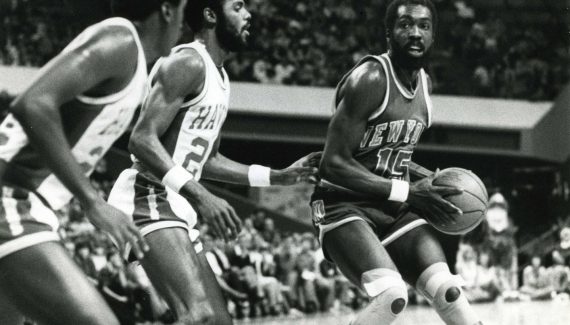
Earl Monroe, the pearl of Philadelphia
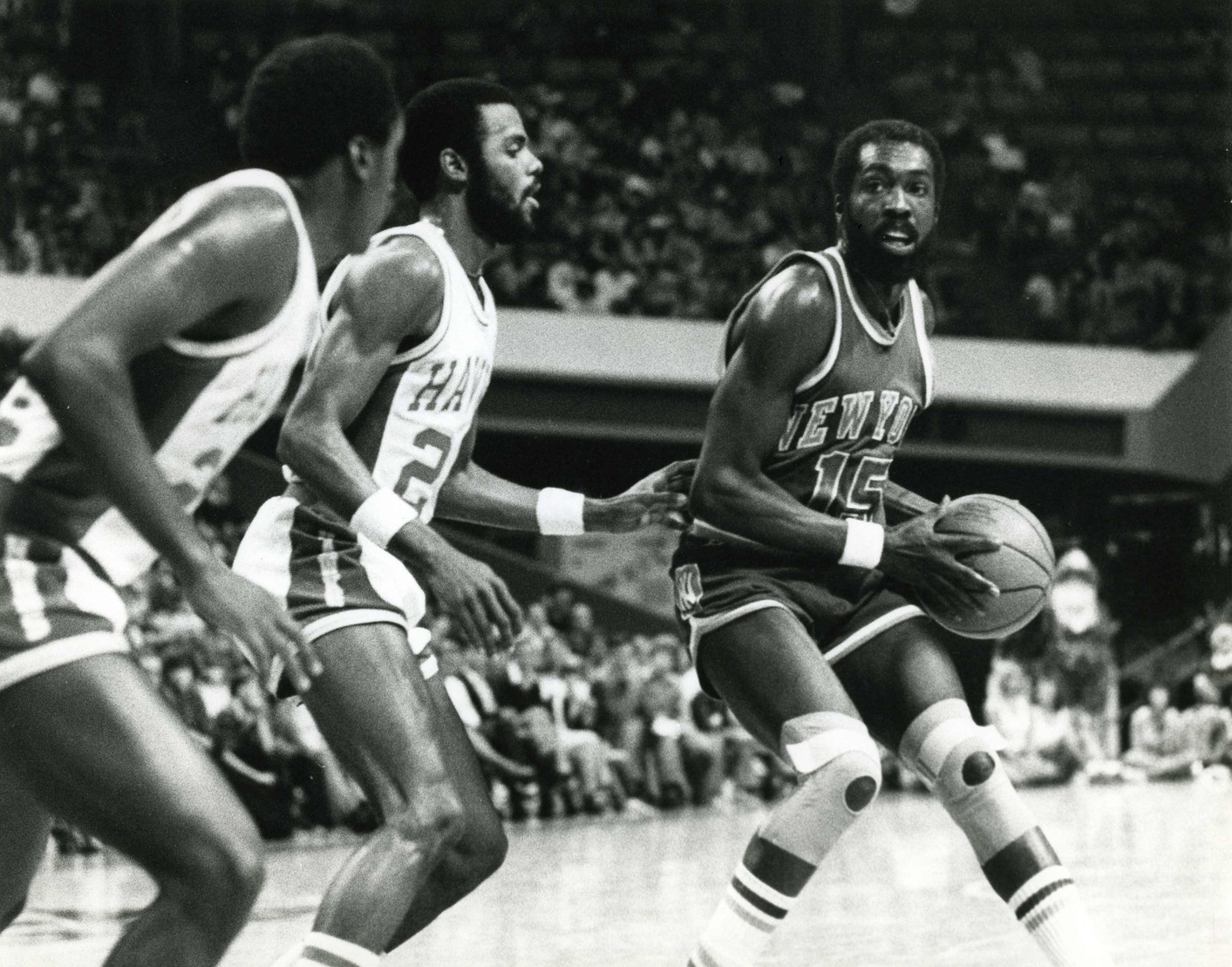 If Ray Allen is nicknamed Jesus, it is in no small part thanks to him.
The scene takes place in Spike Lee’s He Got the Game. Jake Shuttlesworth, played by Denzel Washington, talks to his son Jesus, played by Ray Allen. The discussion concerns the origin of the name Jesus, which is the subject of an argument at the beginning of the film between the two men.
Jake then explains that his favorite player was named Earl Monroe and that his nickname over the years has been na playgrounds from Philadelphia was Jesus. Hence the name of his son.
The reference is pointed, but not trivial: Earl Monroe accomplished the feat, staying in everyone’s mind without a legendary performance or crazy statistics. In fact, he left his mark on the only thing that really matters, which is the pitch.
Not easy, in a league dominated at the time by a certain Kareem Abdul-Jabbar or a few big scorers like Julius Erving, Rick Barry and George Gervin…
The legend of playgrounds
Vernon Earl Monroe was born on November 21, 1944 near Philadelphia, Pennsylvania. He grew up in South Philly and became passionate about sports at a very young age. Not basketball, but baseball, even American football. Besides with his height of 1m91 at only 14 years old, many orange ball coaches are interested in his profile…
His integration into basketball went so well that he immediately became a fan of the sport. He was then promoted to center on his team, a position he held most of the time in his youth.
At the same time, Earl Monroe perfected his game playgrounds Philadelphia and his reputation grew, so much so that he was nicknamed “Black Jesus”. Legend even has it that his real nickname was Jesus, but the predominantly white media made the difference by adding the adjective black. Black Jesus.
During his high school years at John Bartram, and to describe his tremendous offensive game, his teammates called him “Thomas Edison,” in reference to the American inventor.
Earl Monroe then moved to a small black college in Winston-Salem State, North Carolina, about 145 kilometers from a certain college in Chapel Hill. The future of… Michael Jordan.
The Philadelphia native is getting better every year. This is evidenced by his scoring average: 7.1 points freshman23.2 as second year and 29.8 points junior.
Coach Clarence Gaines, a Hall of Famer since 1982, became an important father figure in Earl Monroe’s eyes during his senior year. seniorher most famous nickname was coined by a local journalist. The original term is “Earl’s Pearls”, the plural used by the author to describe his spectacular scoring method. History will remember “Pearl”, or pearl in French.
Indeed, in 1966-67, “Count Pearl” averaged 41.5 points per game, was named the nation’s MVP, and led his college to the NCAA title.
His bullet years
Thanks to his stellar performances in college, Earl Monroe was selected by the Baltimore Bullets with the No. 2 pick in the 1967 draft, behind Jimmy Walker, father of Jalen Rose.
He had a very good campaign, averaging 24.3 points, the 13th-best performance in rookie history, including a 56-point performance against the Lakers. After him, the Bullets won 16 games more than the previous season.
The following year, Earl Monroe backed up his good rookie season by posting a career-high 25.8 points per game. In addition to his individual talent, Baltimore has built a magnificent team around him. So magnificent that she won 57 matches.
The elements of this success are multiple. First of all, the pivot Wes Unseld, the author of an average of 13.8 points and 18.2 rebounds, becomes the rookie of the year and the MVP, which is an extremely rare event in history, since only Wilt Chamberlain achieved this in 1960. Since then, no one has matched this performance!
Then we find some nice talent in the league at the time, like Gus Johnson, Jack Marin and Kevin Lowry, all backed by the ultra-efficient run-and-gun and fantastic defensive presence of Wes Unseld.
The Bullets reached the division semifinals, which was necessary at the time since the conference division did not appear until 1970, but their hopes were dashed by the Knicks, who inflicted sweep. Rebels the next year, but this time, Baltimore lost in Game 7, still away to New York, the eventual champion.
In 1970/71, Earl Monroe discovered The final against the Bucks, but the duo of Kareem Abdul-Jabbar – Oscar Robertson is too strong and this streak ends after 4 short games…
The future therefore looks bright for the Bullets as, with a few good extra picks, the title is not impossible to win. However, salary problems are straining the relationship between the “Pearl” and its franchise.
On November 10, 1971, after only 3 matches, the unthinkable finally happened: combo-guard trades arch nemesis Knicks for Mike Riordan, Dave Stallworth and cash.
His New York period
Earl Monroe arrives in New York averaging 23.7 points in four full seasons in Baltimore. He then finds his best opponent and draft companion, Walt Frazier.
Since 1967, Earl Monroe has actually faced Frazier 21 times and the offensive game of the “Pearls” has always been put to the test by the legendary “Clyde” defense. But this transfer also raises some questions: How do you make the two men coexist and, above all, how do you integrate such a strong offensive talent, but so demanding of the balls, into the perfect collective game of the Knicks?
Earl Monroe is having some difficulty integrating. He carries the ball less and becomes less effective. In addition, he suffered from knee and ankle problems, and ended up playing in just 60 games, averaging 21 minutes, dropping him to 12 points per game. Despite everything, New York has reached again The finalbut Los Angeles won in 5 rounds.
Then, in the second season, the graft continues, “Pearl” averages 15.5 points and his association with Walt Frazier is described as a Rolls Royce hinterland. The Knicks won 57 games and Monroe found the Bullets in the playoffs and won the series in 5 games. Then the New Yorkers eliminate the Celtics, albeit the favorites, to find the Lakers for the third showdown at the stadium The final.
Earl Monroe scored 23 points in a Game 5 victory, and the Knicks won their second title, three years after the one in 1970. But this feat was New York’s last, as the 1968 Rookie of the Year saw all his teammates retire, season after season, and even Walt Freyland was moved to C19.
Finding himself at the helm, “Pearl” regained his offensive flair, with three new 20-point-per-game campaigns, but his two practices ended in early retirement. He retired in 1980, at the age of 35, then became a manager in the music industry, only to return to basketball as a commentator.
A virtuoso in the game
1989 Earl Monroe entered the Hall of Fame and became one of the top 50 players in NBA history in 1996. Last recognition Dec. 1, 2007: His number 10 was retired by the Washington Wizards (formerly Baltimore).
But what will remain of “The Pearl” is the virtuosity of his playing. spin moves was perfect and his offensive imagination knew no bounds. But he was also a very intelligent player, arrived in New York with the mark of maestro one on one, and managed to fit into the Knicks game, becoming one of the favorites of Madison Square Garden.
Earl Monroe thus played in a very collective manner, often preferring to pass the ball to a prominent teammate, also with better engagement on defense, to relieve Walt Frazier. An outstanding professional and legend of the game…
Statistics
926 games in 13 seasons
18.8 points, 3.0 rebounds, 3.9 assists and 1.3 steals average
46.4% on shots, 80.7% on free throws
Award list
Hall of Famer
Member of the NBA Top 75
1973 NBA Champion
All-NBA First Team in 1969
Rookie of the Year 1968
All-Star in 1969, 1971, 1975 and 1977
2025-11-21 10:47:00


