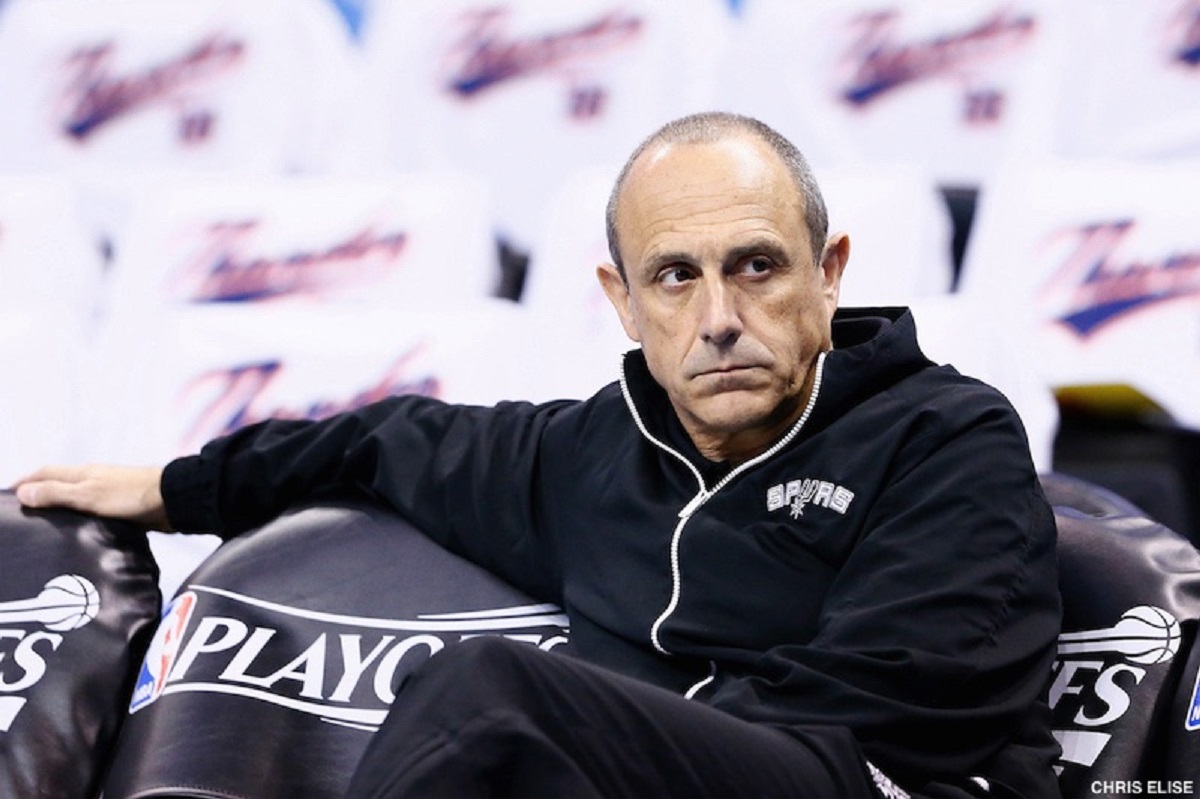
Ettore Messina is proud to see Milan at the heart of the “NBA Europe” project.
 Creative project in the “NBA Europe” league moving forward with great strides. The countdown is now: there are still two years left to put everything in place before the first season scheduled for October 2027.
Twelve planned cities, spread over eight countries, are already causing strong reactions across the Old Continent. In Italy, in particular, the presence of Milan and Rome is fueling enthusiasm — starting with Ettore Messinacoach of Olimpia from Milan since 2019, who sees this initiative as a real recognition.
“I think the owners are very happy that Olympia is an important target for the NBA. This is another sign of recognition for all the commitment that the Armani family has shown to basketball. I also think it is a great recognition for the city and the history of the club.”, he said yesterday at the press conferenceon the margins of Milan’s victory over Treviso. “For the rest, I think the NBA is also acting energetically in communication, to make it clear that it has a plan and wants to implement it in a reasonably short period of time.”
Big clubs… and big deficits
Among the best European technicians, Ettore Messina knows both worlds perfectly. After being a consultant for the Lakers (2011-2012), then an assistant to Gregg Popovich in San Antonio (2014-2019), he measures the gap between the NBA and European basketball better than anyone. The gap is primarily economic.
“The Euroleague offers a basketball product at a very high level. In terms of quality, intensity, tension and passion, only the NBA playoffs can compete.” he added. “But when we read that Real Madrid loses 38 million euros for the Euroleague season, we realize that the economic model is not sustainable. Here, the clubs face huge restrictions, between NIL contracts, NBA two-way contracts and the complexity of the market. This is a big economic problem.”
Another concern: calendar overload. Clubs involved in the Euroleague already have to juggle between their national championships and weekly European fixtures, risking player exhaustion.
“From the end of September until now, there have been 60 injuries. Muscle strains, anterior cruciate ligament ruptures. From this point of view, it cannot continue.”he stated. “We need a model, an ecosystem that can harmonize sports and economic needs and a harmonized calendar. We are open to all proposals, and then the owners will decide how to proceed.”
Between sporting ambitions, economic viability and player health, the future “NBA Europe” will have to find the right balance to assert itself. A colossal challenge, but also a historic opportunity for European basketball.
2025-11-10 10:07:00