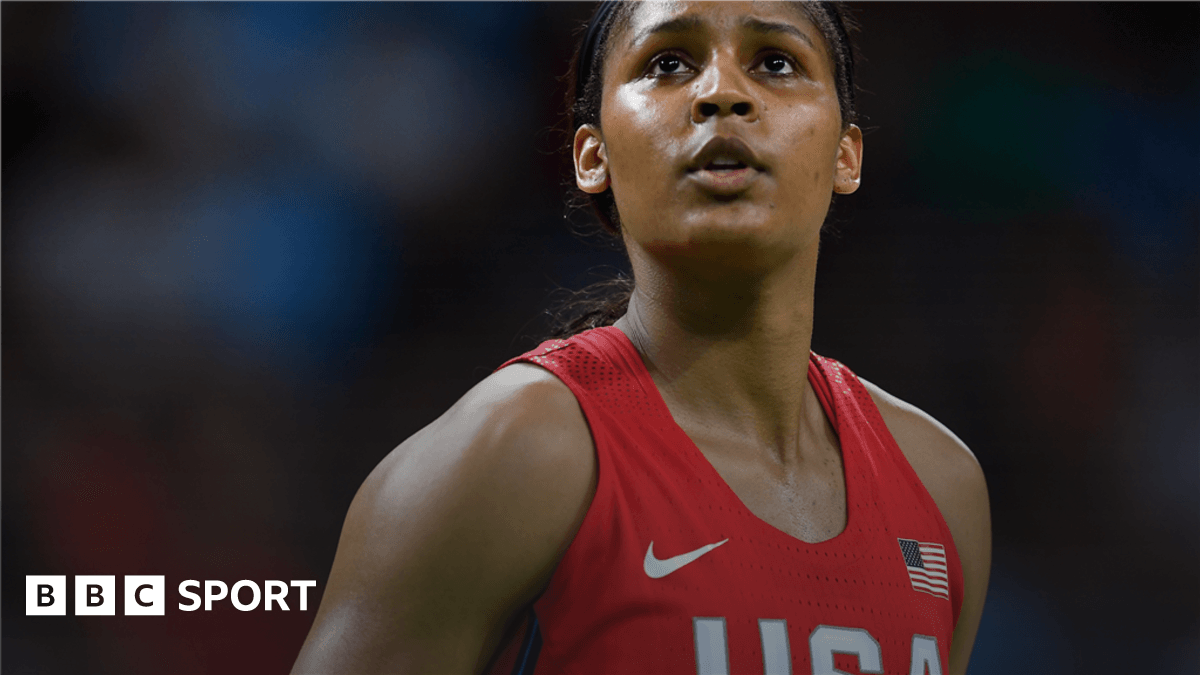
Maia Moore: WNBA star’s successful campaign to free Jonathan Irons
With the click of a button, you can sign an online petition to seek the release of a wrongly convicted person. But that’s not how Moore works.
She’s not asking every athlete to quit their job and join her. But she also doesn’t care what your social media says. What matters is what people do when no one is looking.
Moore fought the dehumanization she talks about by playing checkers with Irons. She visited him on public holidays. When he was released, she invited Irons to her home.
Her entire philosophy can be summed up in three words: keep showing up.
“If you have any power or resources, you give it up and empower others,” she says.
Moore believes in sacrificing what she has to lift others up and in turn become a better person.
It is a selflessness that many of us would not have the strength to approach. But selflessness may be what the world needs to drive real change.
And being so entwined with one man’s future means that, even though she was successful on this occasion, she knows exactly how hard the fight could be.
When asked what she learned in the process of freeing Irons, the list is long and the scope of the questions enormous.
Should drug laws be changed? Are the police overfunded? Are they underfunded? Which is better, punitive or restorative justice? How can voting procedures be changed?
Prosecutorial reform was a major focus of Moore and Irons’ fight. But she now knows the importance of criminal justice reform and changing the US’s approach to prison.
“It’s so wide,” says Moore.
“When I first started my education, I was so overwhelmed – as are all of us who have recently had our eyes opened.”
If there’s a huge amount of work to be done, Moore knows she can’t do it all, and she’s not alone in her struggle.
She inspired other athletes to follow her lead. Former University of Connecticut teammates Renee Montgomery and Tiffany Hayes are taking a season off from the WNBA to help with voter registration and social justice reform.
For now, Moore will stick to prosecutorial reform. Her campaign, Win with Justice, seeks to challenge a culture of “victimization” that is seen as “eroding the trust our community must have in those charged with promoting public safety.”
She says, “I see such a connection between sports and leadership that prosecutors have in winning and losing. What is victory and what is defeat?
“I will continue to try to help and share and empower others to do the same.”
It is not yet clear what form Mura’s continued work will take, nor if he will return to basketball.
The release of Irons, now 40, may be the end of a journey for him and Moore, but it won’t be the end of their friendship.
“I can’t,” Irons says when Moore asks him to describe his emotions for the camera that captured the moment of his release.
He shook his head a few times before finally muttering, “Life.”
He pauses, then continues: “I feel like I can live now. I would like to thank everyone who supported me – Maja and her family. I’m so grateful to have somewhere to be at home.”
He wipes the tears from his eyes before picking up the face mask that the other inmates had made for him.
It has “hope” written on it, because they need it. That’s what Irons and Moore have needed for the past 13 years.
“I won’t forget them,” he says. “And I will help those who can.”
2020-08-20 05:48:00