NBA Europe is committed to targeting the largest commercial markets on the continent
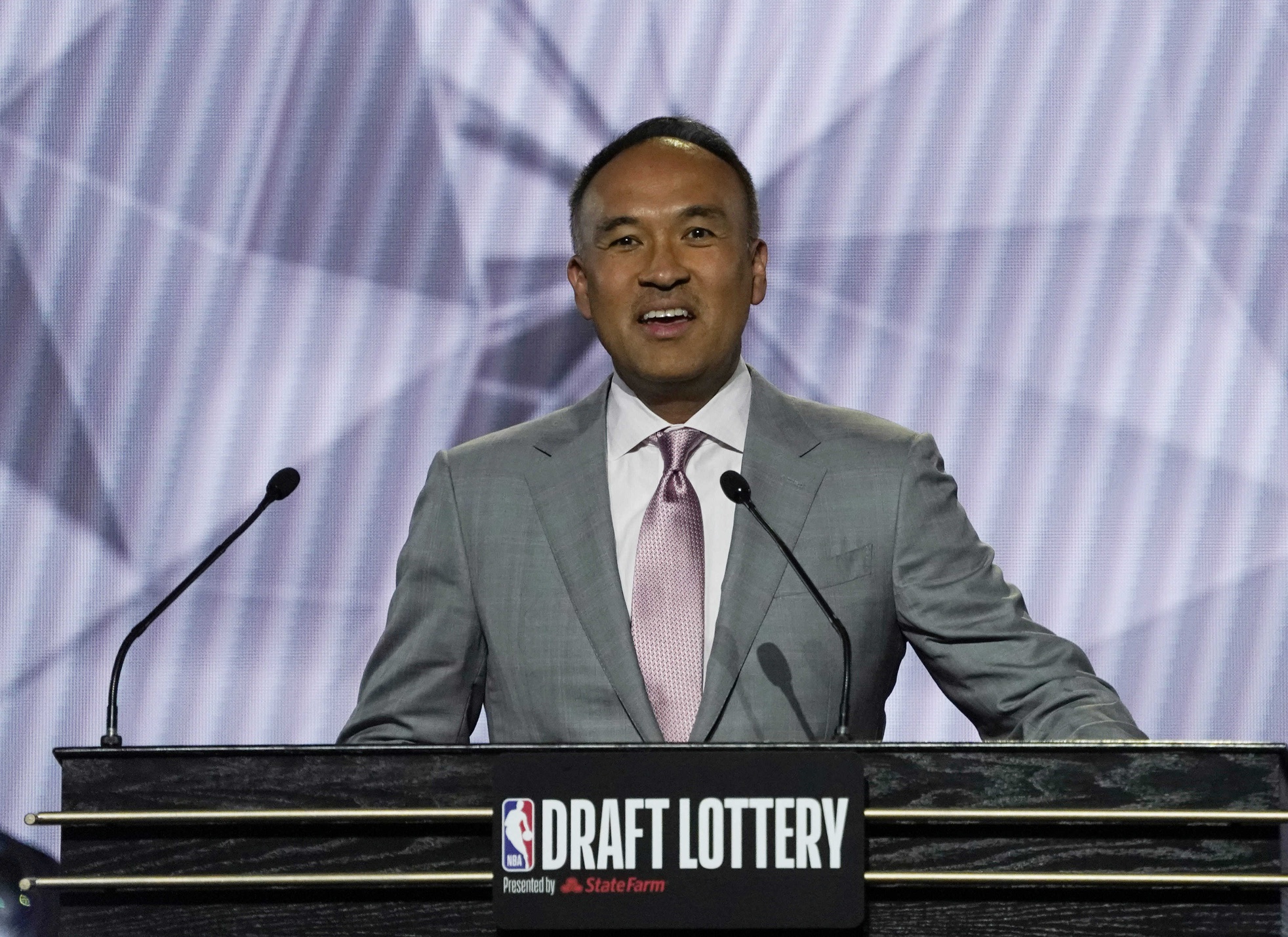 As the partnership between the NBA and FIBA moves toward creation NBA Europe by 2027, Mark Tatum repeated the logic of future franchises during an interview with Sportico.
For Adam Silver’s right-hand man, the starting point is simple: European basketball is too difficult to “follow” for the general public, due to a lack of clarity and stable benchmarks. “If you’re a fan, it’s hard to follow professional basketball in Europe. It’s easy to follow the NBA, but it’s hard to follow European basketball” he assures.
Mark Tatum then targets what he perceives to be as the main structural weakness Euroleagues: absence of important clubs in several major commercial markets.
“Some of Europe’s biggest commercial markets are missing the top tier of the Euroleague”continues in his demonstration. “There are no top teams in Great Britain, even though it is the biggest market in Europe. There is no top basketball team in London, in Manchester. There is no permanent team at a high level in Paris, in Berlin, in Rome. This is why they miss out on the biggest commercial markets, which explains why they fail to market basketball. »
Fully accepted reading network: without a permanent presence in these economic capitals, it is impossible to maximize TV rights, sponsorship and ticket sales, and thus change the scale.
Euroleague in the headquarters of the European Union
A direct consequence? At launch, the new European league would aim for a stricter format with “standing franchises” in the large commercial markets of the Old Continent. “Our idea is to create this league, which would have between 12 and 16 teams, with the biggest countries having permanent franchises. Examples include the UK, Spain, Germany, Italy and France. Two teams in each of these markets that we’re confident will have franchises, and then we’ll open up the league to the rest of the ecosystem.”.
This means giving up (at least temporarily) countries with a strong basketball tradition (Lithuania, Serbia, etc.), but limited economic potential.
Interesting: at the same time, the leaders of the Euroleague published on their site a press release detailing their trip to Brussels to meet with the European Commissioner for Intergenerational Equality, Youth, Culture and Sport, Glen Micallefin the headquarters of the European Union.
“Paulius Motijunas and Commissioner Micallef shared their thoughts on the current challenges facing basketball and European sport as a whole. They agreed that close cooperation and open dialogue is necessary to improve the entire basketball ecosystem, stimulate the future growth of the sport and stay true to the values and identity of European sport.” can we read…
2026-01-27 14:11:00