“The lost dream team”, the secrets of the broken and painful Yugoslav myth
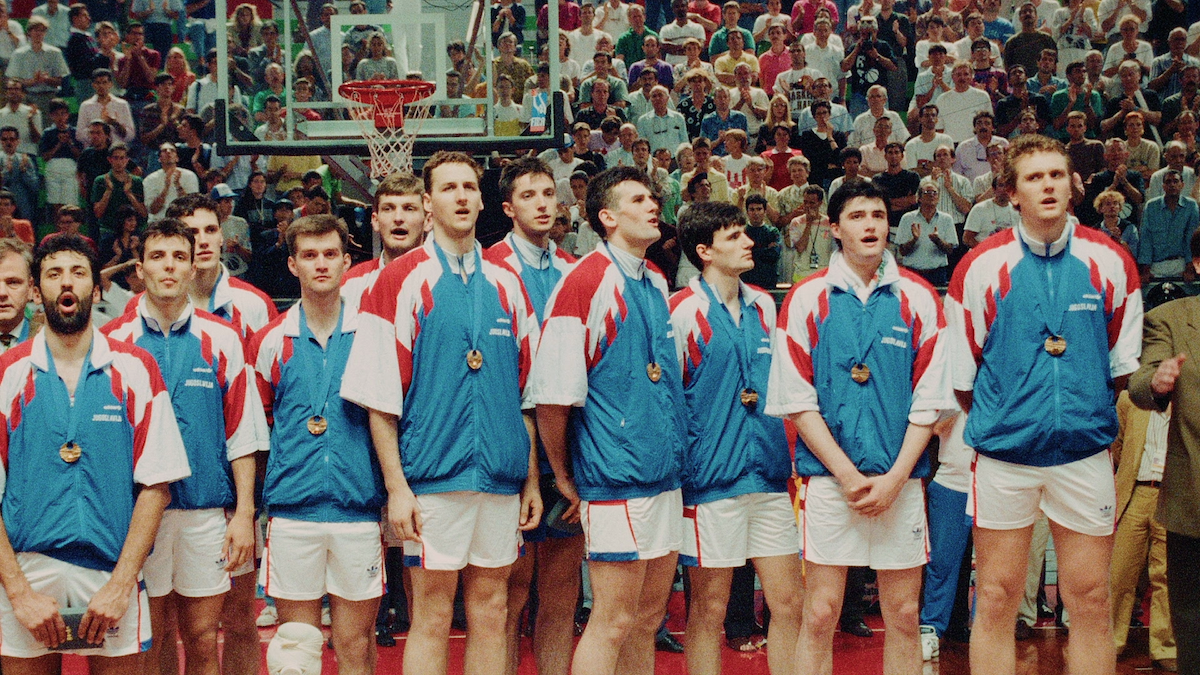
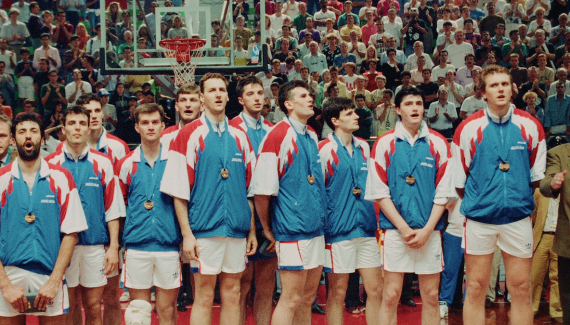
It is the story of a team that gave the maximum for their country, while it… was disappearing. This story is about the Yugoslav national team – and its future members (Tony Kukoc, Vlade Divac, Dino Radja…) – sent to Rome in 1991 to compete in the European Championship.
A year after the triumph at the world championship, at the expense of the USA, defeated in the semi-finals. And a year before the Olympic Games in Barcelona for which ” Dream Team » The American will be mounted to wash away the insult from 1990. The revenge that the entire basketball world was waiting for did not happen in the end.
The documentary The Lost Dream Team returns to the historical-sports epic of this other dream team that has remained in the shadow of great stories. Including those from regions of the world where nationalist waves are never far away. « This story was not known even in Croatia “, noted director Jure Pavlović, who answers to Basketball USA from Zagreb, according to which “ no one really considered it ».
The director comes across the story
He himself, then just a kid, learned about this episode only in recent years. unimaginable “. Almost by accident, flipping through the local newspaper. This basketball fan, already aware of the path of former local legends, was amazed to learn that Serbs, Croats and Slovenians play under the same jersey. for a state that no longer existed ».
Director, author drama Mother and daughter released in French cinemas in 2021, decides to fuel his curiosity. In parallel with the documentation work, he drank coffee with Velimir Perasović, a former member of this Yugoslav group, who gave him a first look at the events. It was the beginning of a long and ambitious search for the point of view of the other 11 players in the team, as well as the coach at the time, Dušan Ivković.
It is not easy, apart from fishing for archival images of the competition (in Croatia, Slovenia, Serbia and Italy), to find all these little people scattered around the Balkans. It is also not easy to convince them to testify on camera. Because the issue remains delicate, even “ traumatic », for some of them, especially among Croats (Toni Kukoc, Dino Radja…).
Still a sensitive topic
« It’s a bit of a touchy subject because some people still don’t like that they played for Yugoslavia, even though it wasn’t their decision in the end “, assures the author of the film who insisted a lot on the protagonists on the idea of telling things through their own eyes. And not through his own, Croatian director.
« These political issues can hurt someone in one way or another », says Jure Zdovac, the first to speak in the documentary in front of a black background that reflects the gravity of the event. Then Toni Kukoc takes us back to the beginning of the European competition, to the state of mind of the team – the tournament’s favorite – where no one cared to know where their teammate was from. ” For us it was Yugoslavia, one team, one country. »

A mantra shattered under the weight of nationalistic thinking. Between the image of a smiling and confident team getting off the bus to Rome, suits, ties and sunglasses for everyone, to this almost embarrassed ascent to the top step of the European podium, only a few days passed in June 1991. Eternity on the scale of the local political scene in turmoil.
A team member must throw in a towel
Because in the middle of this Euro 1991, while Yugoslavia is torturing Poland on the floor, 900 kilometers north of there, Croatia and Slovenia are declaring their independence. In Rome we are trying to create a bubble around the players. Basketball, not politics. However, this reality of the collapse of the republic will hit the team in the face.
A few hours before the semi-final against France, the Slovenian Jure Zdovac received a phone call from the country’s director of his Smelt Olimpija team: he let him know that the playmaker would be considered a traitor if he continued to wet the Yugoslav jersey. Torn, ” family » The Yugoslav woman sent to Rome must continue her journey at 11. « Obviously, none of them wanted war, or for any of this to happen. But in the end they were powerless », summarizes the director.
Despite this background, Kukoc and the rest would eventually defeat the French, before winning the European crown the next day, with a 15-point margin against Italy. The unrest during the medal ceremony, with the national anthem avoided by part of the team, will be palpable. And that, before returning to the “country” in virtual anonymity. Gold medal or not, what’s the difference: the tanks are in the streets. This victory does not evoke the unifying euphoria that we know so well.
https://vvv.youtube.com/vatch?v=J9rUIIRP7_o
« Here’s what happened. And in a way, it ends up being a bit of a pessimistic message. It’s not typical, it’s not like the American sports movie hero stories. Sports help people, that’s what some players thought: “If we win for Yugoslavia, it will mean something.” They won, but it didn’t live up to those expectations “, says Jure Pavlović who loved – although a bit romanticized for his taste – Once Brothers, focused on the relationship between Dražen Petrović and Vlada Divac.
The fact remains that his documentary allowed all the protagonists of this Italian trip to introspect. ” They remembered well how they felt. It was a turning point in their lives, an emotional turning point, because before the championship they were just young men in their twenties who only thought about sports and some typical young things. So the emotions were very present, and I think that really came through on set. », judges the director, for whom everyone could get a better idea of what their teammate felt in 1991.
Symbolic co-production
According to him, this is how Vlade Divac and others appreciated the film. because it is very balanced “. The reviews were good even after the first screening at the Pula Film Festival (Croatia), then distribution in the territory of the former Yugoslavia. After the Sarajevo Film Festival (Bosnia and Herzegovina), the documentary film will shoot the film Tallinn Dark Nights (Estonia).
Even wider international distribution is planned in the coming months, through the French production company Goodfellas. The documentary should be available to the French public, on VOD or streaming, next year. The Lost Dream Team is a co-production of Croatia, Serbia, Slovenia and Italy. Association described as ” natural » of the director which contradicts the final message that emerges from the images.
« It tells how nationalism and all these events happened, how wars broke out, but through their perspective. It is very, very relevant to what is happening in the world and in Europe today. We can notice, even with small signs, that we may be preparing for a new era of conflict. The film also shows how to manage friendships in this situation. It is also quite universal », term-t-il.
https://vvv.youtube.com/vatch?v=DT28ak-v1Vs
Photos provided by Fabio Ramadi
2025-11-23 14:07:00