Why stop the 3 pt flood, and above all how? • USA basketball
As the NBA wonders if teams are now shooting too many 3-pointers, a quick look at the reason for this steady increase… and some ideas to mitigate it.
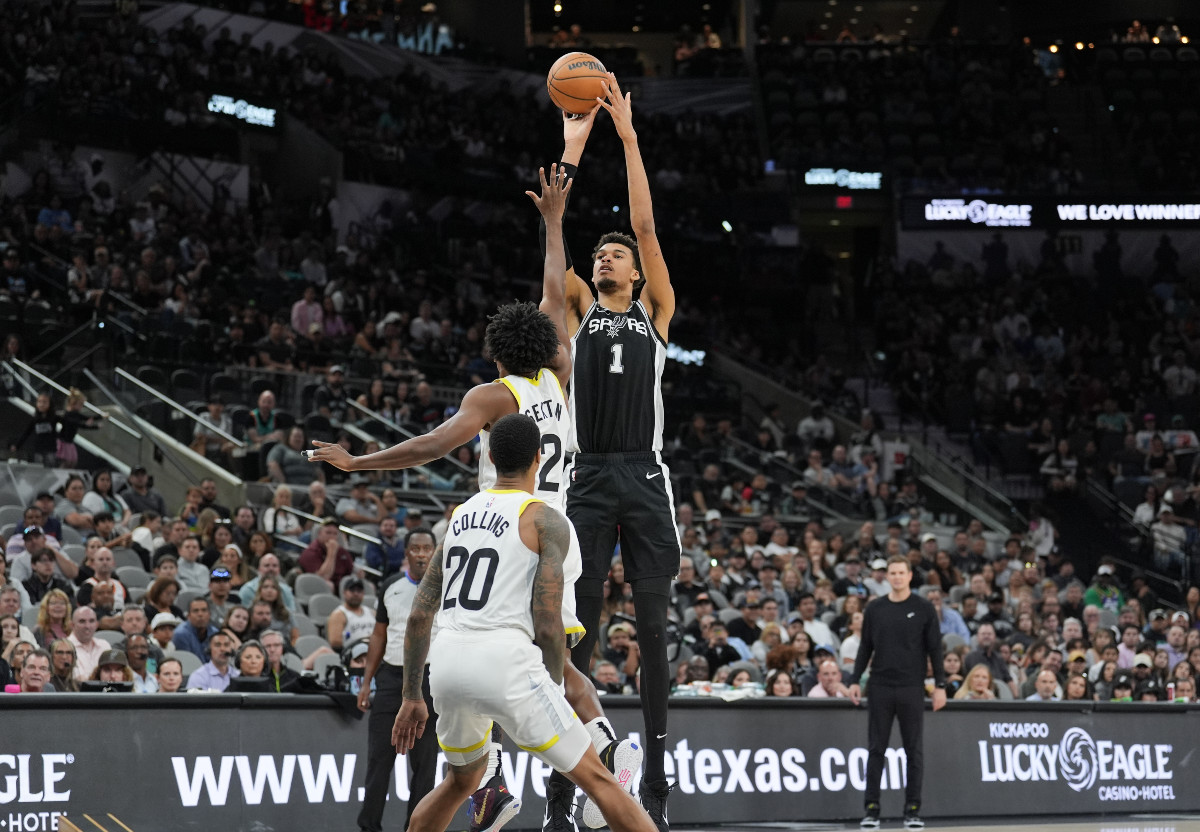 The NBA was thought to have reached something of a 3-point plateau in recent seasons, but Joe Mazzula’s Celtics reignited the long-range shooting race, winning the title by making the most of this weapon.
Again this year, Boston is taking more than 50 long shots per game (more than 55% of their shots), with the likes of the Bulls (44.1 attempts per game), the Hornets (41.8) and quite a few other teams following suit. we’ve never seen so many outside shots in the NBA. And inevitably, as the league struggles at the heart of the attention economy increasingly competitive, this style of play is questionable at best and disgusting at worst…
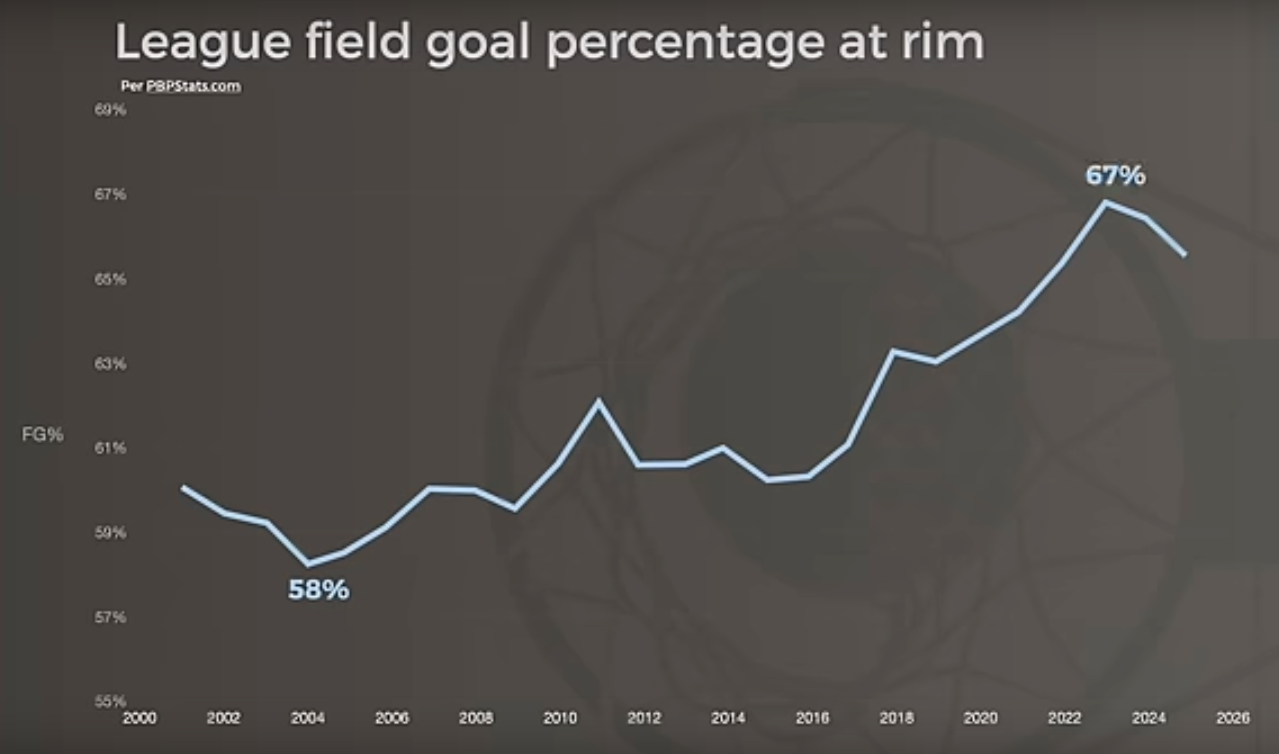
Ben Taylor, of Thinking Basketball, has again published a very interesting analysis on this topic. Obviously, I recommend watching it in its entirety, but the main takeaway is that the triple by itself is only a second or even third option for attacks. First of all, it allows the defense to stretch as much as possible and free the racket, which leads to a significant increase in shooting efficiency near the circle.
Fighting and dodging
By comparing images from different eras, Ben Taylor makes it clear that the use of the three-pointer and the “spacing” is a question that begs defenses, with offensive leaders continuing to hone their mastery of this skill.
https://vvv.youtube.com/vatch?v=LB4h8PUAkvE
Is this 3-point NBA more painful to watch than the “physical NBA” of the 1990s or the “isolated NBA” of the 2000s? Is watching a team that shoots 45 times from distance less enjoyable than Tim Duncan setting up his defender 45 times a game?
I personally think that the difference lies mainly in that the concept of combatwhich leaves a lasting impression in sports. Spurs post-ups in the 2000s didn’t leave me with amazing memories as a viewer, but when Tim Duncan had a low post, the battle began. It was a fight, a direct and primary hand-to-hand fight. Even the isolation of Tracy McGrady and Allen Iverson in the 2000s was of this order. It was perhaps less rough, but there was the notion of a direct duel, a fight between an attacker and his defender. Threes, on the contrary, are a combat bypass, especially when taken as the first intention in a counterattack or after the slightest movement.
Shots carry in them arithmetic charge but also symbolic chargeassociated with perceived difficulties. From this point of view, a basket after a low-post melee represents more than a three-pointer on the counter, against a defense that is not yet in place.
Moreover, Reggie Miller’s or Ray Allen’s three-pointers after long seconds of separation between screens also carried this symbolic charge of the battle, albeit different, between the attacker and his defender.
In my eyes, the frustration with this NBA trio is primarily related to this feeling of avoiding struggle. however, recent studies show that Major League teams are shooting too many triples now, especially if we consider fouls caused by different types of shots. Taking these parameters into account, twos (which cause far more fouls) have been worth more than threes since 2017/18…
Savings strategy?
But then why is the share of triplets still increasing? Because it just is a strategy to avoid fighting and thus save money.
The Celtics, the first “3&D” team (meaning all their important players are both defenders and 3-point shooters), are first and foremost a big defense, whose first curtain is very difficult to penetrate. And if that’s the case, it’s because players can save energy on offense thanks to this overuse of the three.
To recap, while we were previously used to seeing stars make saves on defense, “role players” with a defensive calling made saves on offense, transition from individual defense to collective defense in the NBA changed things. Boston has so systematized the fact that we can apply this principle on a team basis. Now there are entire teams that try to save energy on defense by limiting the fight on offense, thanks to threes.
Another frustration, mentioned by Adam Silver, is the standardization of attacks.
“If there are adjustments to be made, I think it’s this notion of more offensive diversity.” I watch as many games as you, and it’s not necessarily about the threes, but for some viewers, some offenses are starting to look too similar, with teams copying each other. I think that’s something we really need to pay attention to.” explained the “Commissioner. »
There is even a “double standardization” because not only do the attacks copy each other in the way they generate threes, but the differences within the team are also reduced. In a group like Boston where Derrick White, Jrue Holiday, Jaylen Brown, Jayson Tatum or Kristaps Porzingis start the action behind the 3-point line, waiting for the right duel to attack off the dribble, provoke an assist and find a teammate standing from a distance, the only difference in profiles player at the end becomes great…
Should we blame the players and their teams for maximizing efficiency, using weapons with superiority? That would be like blaming pyrotechnicians for using cannons by causing a change in military architecture and near fortified castles.
So if the NBA wants to stop the 3-point deluge, there’s only one solution: limit the effectiveness of this shot.
Direct solutions
– Move back the 3 point line. We know that skill by zone and by distance is fairly constant, and the difference is made in relation to the number of players who can now shoot from distance. By moving the 3-point line back 50 centimeters, the external address would automatically decrease to 33%. Under these conditions, the triple would be an effective weapon only for a few experts, capable of drawing from a long distance.
– Eliminate the triples in the corners. Without going so far as to move the 3-point line, simply eliminating 3-pointers in the corners, where the line is closest to the circle, and are therefore particularly effective, could change the geometry of the offense, and specifically limit the area that needs to be monitored for set defenders. to outside shooters.
Indirect solutions
– A dunk that brings 3 points. To limit the effectiveness of the triple, we can also consider increasing the effectiveness of other shots. So we can imagine awarding three points for each dunk, which could push the teams into the circle, but also the defense. Although it may rekindle the notion of combat and deliver something spectacular…
– Reduce racket size. In the early days of the NBA, rackets were only 6 feet wide. Faced with George Mikan’s low dominance, the league doubled this width in 1951, before increasing it to its current size (4m88) in 1964 to limit the influence of Wilt Chamberlain. To increase the effectiveness of the shot from the low pole, it may be enough to step back and reduce the width of the racket to allow the inside players to catch the ball closer to the circle.
Crazy solutions
– Allow 3-point shooting. a few years ago, journalist Kirk Goldsbury who released a book about the evolution of the shot in the NBA where he came up with a whole bunch of solutions, more or less crazy, to limit the impact of the three. Among them, there was, for example, the authorization to “target” shots from a distance. The option is intriguing, especially since it would return value to turns against outside shooters, even if all the implications of this rule are difficult to predict.
– Allow each team to choose their own 3-point line. Even crazier, this idea is even more intriguing. She suggests that each team define, depending on their team, their own 3-point line, which they will keep all season long in their room. Therefore, teams with big outside shooters may choose to move the line, others may choose to eliminate outside shots in the corners, or even eliminate the line entirely if the team wants to build around a dominant low post. The idea seems a bit crazy, but it would have the merit of completely eliminating the notion of standardization as the offensive and defensive strategies would be completely different from room to room.
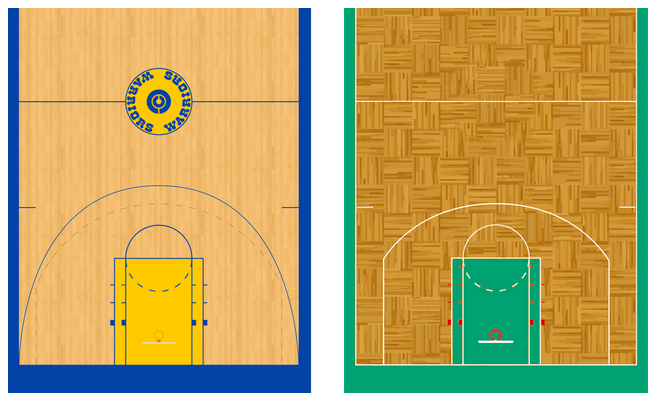
I’ve left aside ideas like a maximum quota of 3 points per match (proposed by Bill Simmons) because such measures seem too arbitrary to be really applicable. And I’ll let you imagine other solutions, more or less absurd…
2025-01-05 15:00:00