Why the Cavs can trade Darius Garland for James Harden and why it’s wrong
The Cleveland Cavaliers are in trade negotiations with Los Angeles Clippers about a Darius Garland for James Harden.
That rumor started Monday night with a cryptic announcement from @MGRADS on Ks and was Chris Mannix of Sports Illustrated later clarified and other journalists, including ClutchPoints’ Brett Siegel and Tomer Azarly. But why would the Cavs willingly trade a 26-year-old All-Star-caliber point guard soon to enter his prime for a 36-year-old star combo guard who, despite being an MVP and 11-time All-Star, is on the tail end of his career looking for his next payday?
That’s the first question that came to mind when the rumblings took off, so after some digging, here’s what the logic might be behind the discussions (and why, if so, Cleveland is pretty much wrong).
It’s getting hard to justify Dario Garland’s contract
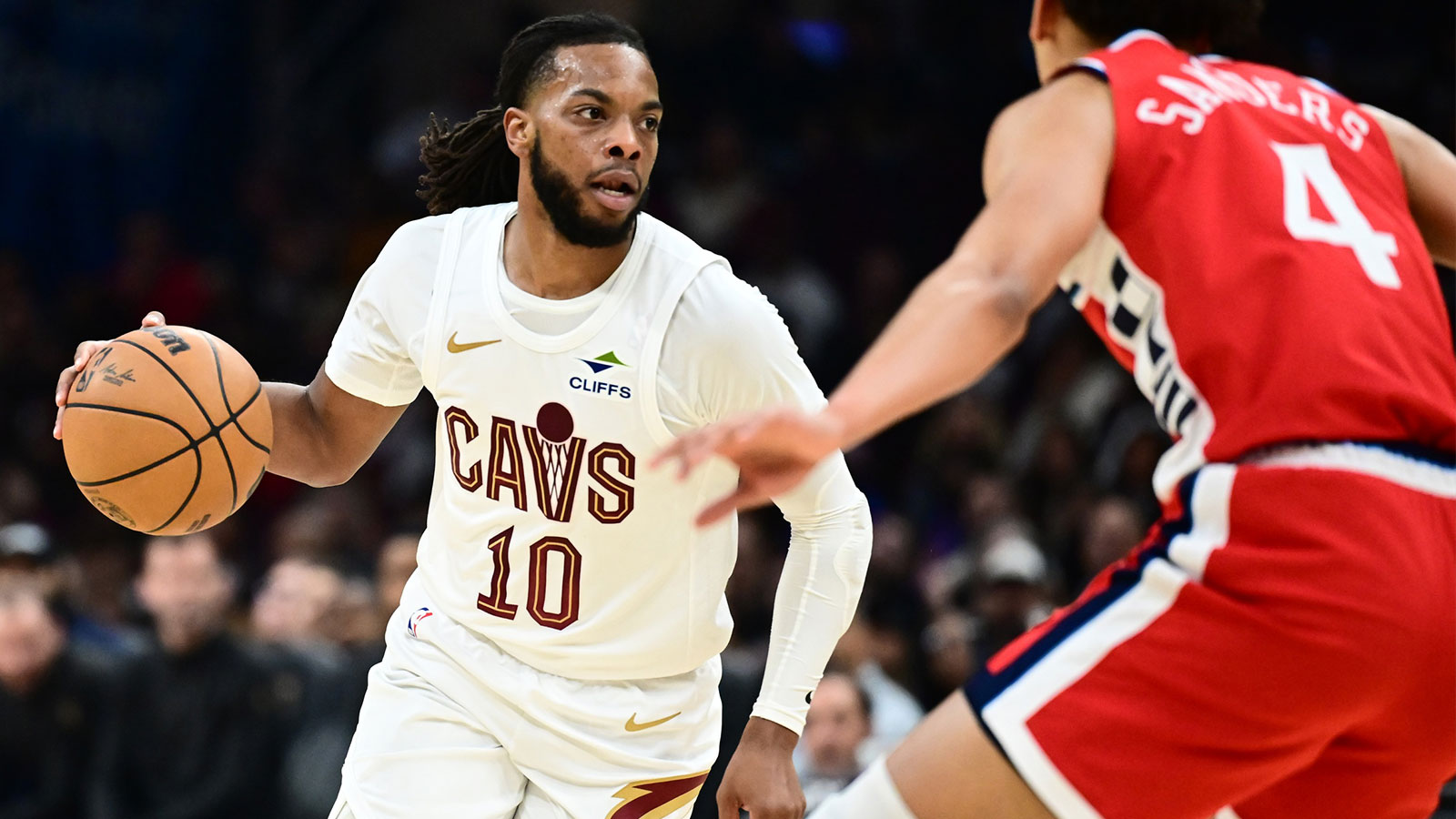
Everyone in the Cavs organization understands how talented and good a player Garland is, as do most teams in the NBA. There’s no disputing that when he’s healthy, he’s in thin air as a true floor general; the main point is part of that “when healthy” term. Garland has only played 26 games this season. Initially recovering and managing strain on his left big toe, he underwent surgery last June and missed the first seven games of the campaign.
Then, just three games into his return, Garland was injured again in early November against the Miami Heat and missed five straight games. When he came back from that setback, it looked like he was ready to go.
Garland accounted for 20 of Cleveland’s next 23 games, averaging 18.6 points and 7.2 assists on .463/.359/.845 shooting. Shortening that sample size, for the start of 2026, he was in consideration for NBA Player of the Week for the Eastern Conference; from January 6-12, Garland scored 22.5 points and dished out 7.0 assists with just 1.3 turnovers on 55.1% shooting, including 40.0% from long range.
He began to look like himself and, not coincidentally, the Cavs began to build winning momentum. Once again, however, Garland suffered an injury in the first of a two-game road series with the Philadelphia 76ers. He was on another tear that night with 20 points, 7 assists, 3 rebounds and a steal in just 23 minutes, but then caught a bad break.
While on the floor, Garland put all of his upper body weight on his lower half, awkwardly positioned to try to recover the loose ball. He screamed in pain and pounded the floor in frustration. Garland limped back to the Cleveland bench under his own power; it seemed more boring than scary. Cavs head athletic trainer Stephen Spiro examined his foot, and Garland reluctantly returned to the locker room. He did not return to the game.
Cleveland issued a press release on Jan. 18 stating as much Garland suffered another sprained big toethis time on the right leg. The team said that afternoon that he would be re-evaluated in 7-10 days. The only public updates from the Cavs since then have come from head coach Kenny Atkinson, who reported that Garland was on the court but without contact.
“He’s kind of day-to-day right now,” Atkinson said on Jan. 26. “I can’t predict if he’s going to play that way or not. You know how things are when you’re cleared to work on the court, but there’s progress in that. Sometimes I think there’s an injury, and then it’s like it’s also OK to get him ready for the NBA game.
“I think there’s a buildup of that. So it’s going to take time. It usually is. You have to go from no contact to contact with the coaches, right, (then) live 1-on-1, live 2-on-2, and then we always want to build at least some 5-on-5 session.”
After playing in a career-high 75 games last year, Garland could be on his way to his fourth sub-60 game season. Even with the production he brings when he’s on the floor, paying $39 million for it, then $42 million and $44 million over the next two years with unknown availability, isn’t ideal. And it’s nearly impossible to consistently improve your roster when it’s in the dreaded second apron, where the Cavs are the only team that functions as such.
The hard truth of things with a failing position
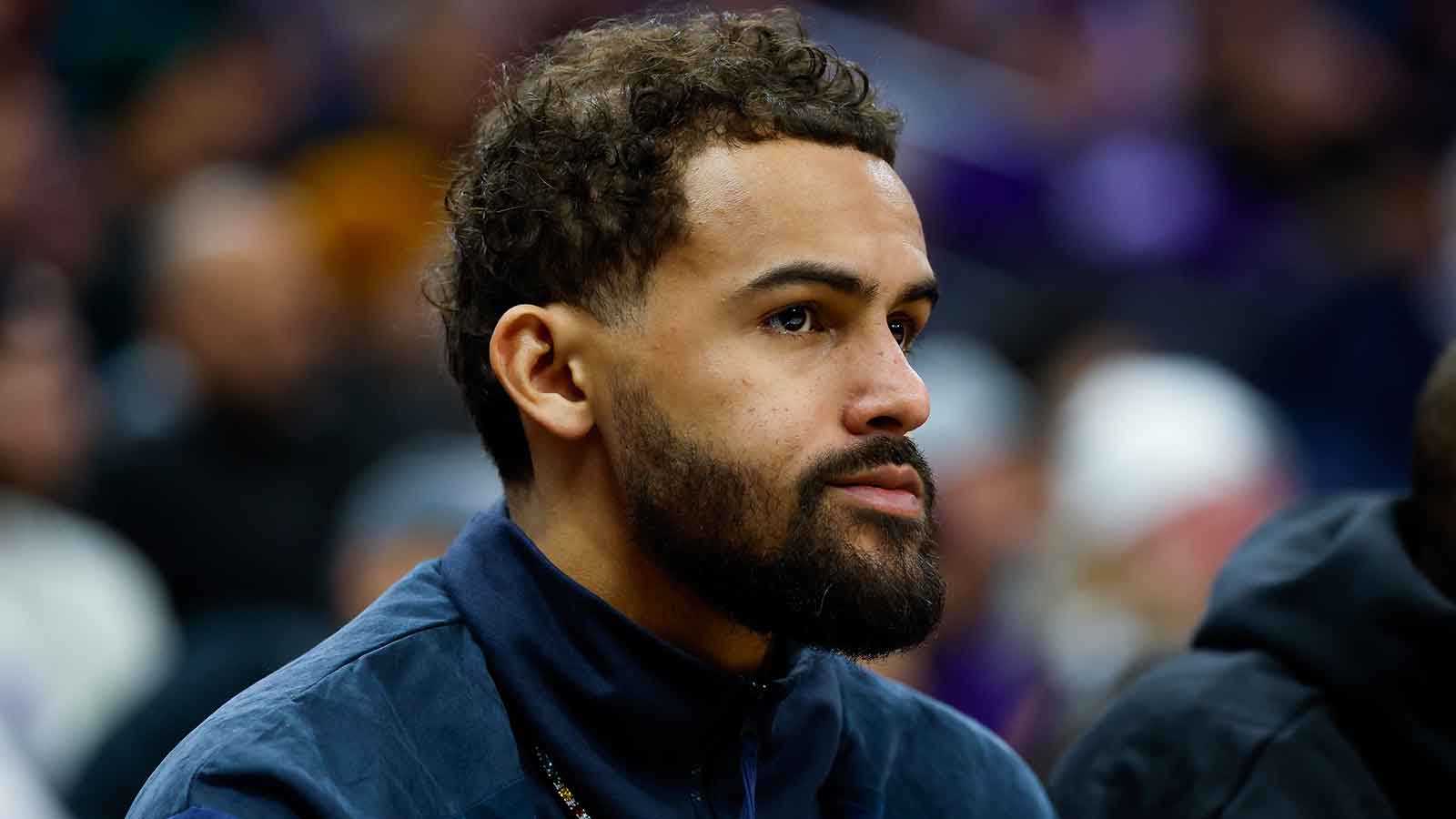
Not so long ago, The Atlanta Hawks have changed the longtime face of their franchiseTrae Young, to the Washington Wizards for CJ McCollum and Corey Kispert. It was an absolute shock to the NBA world that he had such a low return for someone who is a four-time All-Star, former All-NBA talent and consistently the league’s top assist-maker.
McCollum in the club phase of his career and a rotational hitter in Kispert? No equity blueprint? That was it?
Maybe it’s a sign of what’s to come for the point guards. Aside from Shai Gilgeous-Alexander, Luka Doncic and Cade Cunningham in the world, can you depend on one offensive player? Stephen Curry does it, as does Jalen Brunson; the same goes for Garland. But when compared to the league’s other winning teams, it’s a short list. Would you consider Jamal Murray or Tyrese McKay to be a true point guard? Not really, right?
That’s because the NBA has become positionless. It’s a trend that started a while ago. Wings and bigs can handle the ball, playmaking, shoot, score and defend. Multiple guards can also do this, which is why you see less of a “maestro” archetype and more of a complementary backcourt approach. We see skill sets working together rather than delegating duties. Versatility is the name of the game.
Garland can be lethal off the ball, a spot-up partner for Mitchell and can be organized at the same time. He has a special relationship with Jarrett Allen and Evan Mobley in high pick-and-roll situations, and his ability to drive, shoot, probe and manipulate is among the best in the league. But it’s not like the Cavs haven’t found ways to combat his absence lately.
Mitchell can play the position, though it’s not useful for Cleveland, as he should focus on scoring without forcing issues; although he makes some wildly impressive passes and sets guys up well, he should be a player first and foremost. Evan Mobley has shown flashes as a dribble-handoff hub above the break and in the middle of the floor, with a keen sense of timing for bounce passes and over-the-top layups.
Jaylon Tyson was a major playmaker during his time at Cal, and recently showed that he can help at the NBA level, although he still needs to work on taking care of the ball. The development of Craig Porter Jr. stands out as a 6-foot-2 hybrid guard who plays, crashes the glass and makes big plays defensively. Used as a screener, he gets to his spots at a unique pace and seems to pop up at the most critical moments of the game. Tyrese Proctor was also better than the late second round pick should have been.
Add in the fact that the Cavs just traded for Dennis Schroeder on a “lighter” $15 million deal, and it’s easy to see what the team is thinking. It’s less about being a “small guard” and more about his position going the way of running backs in football. The Charlotte Hornets and Memphis Grizzlies could go down the same path with LaMelo Ball and Ja Morant.
Looking at what happened with Young, maybe the Cavs were leading the way.
Despite all that, this is the wrong call
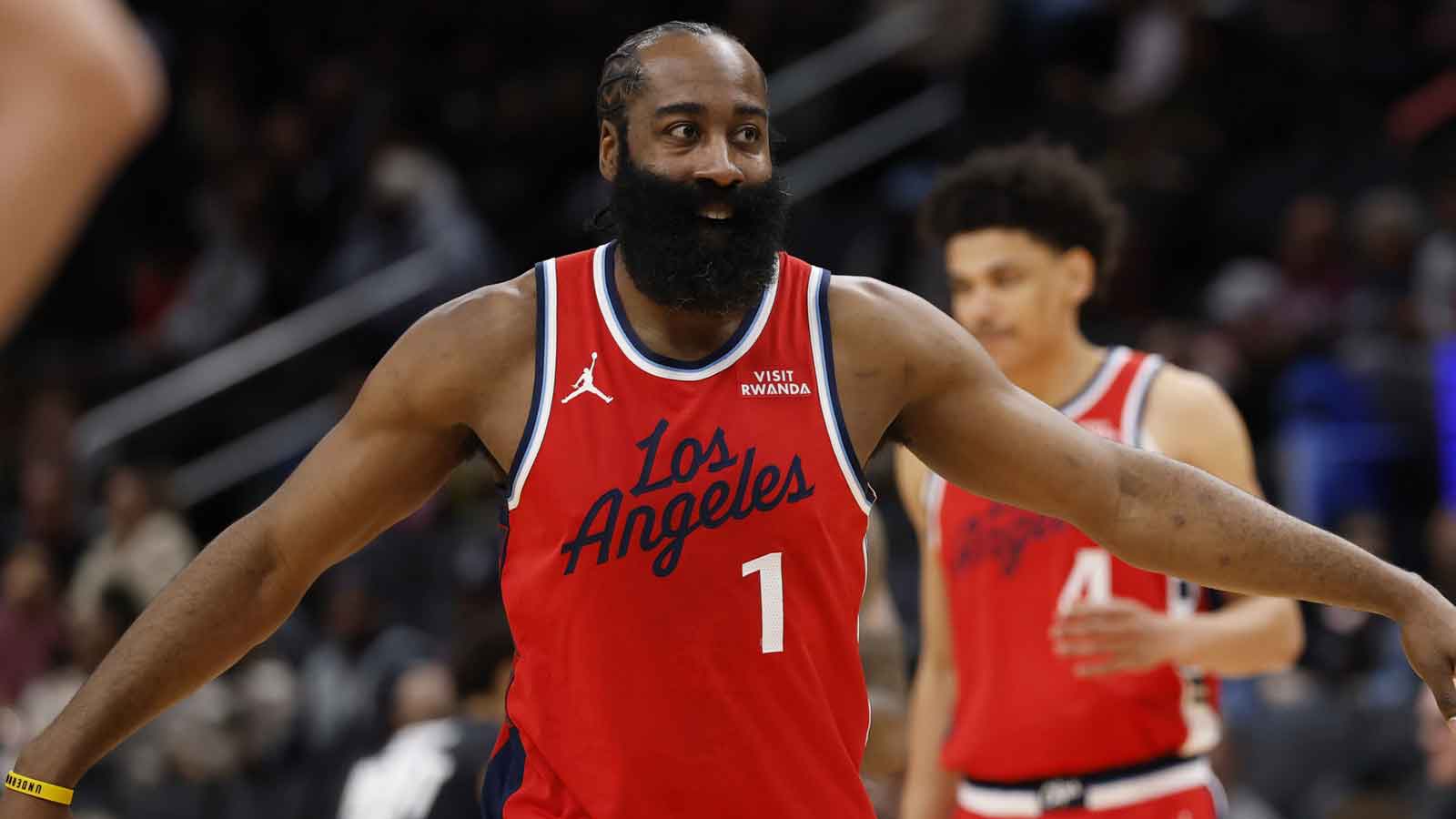
If Cleveland wants to move on with Garland, there has to be a reason. The Cavs are swinging, but they are also one of the most calculated front offices in the NBA. Kobe Altman, Mike Gansey and Co. are too smart to send Garland to get Harden, and only Harden, with nothing else in mind. The injury could be worse than what the team has been leading up to. Or, maybe there’s something bigger in store.
Speculation is rife over Giannis Antetokounmpo’s future, or lack thereof, with the Milwaukee Bucks. Is Cleveland a possible destination for the Greek Freak? It would make a lot more sense for the Cavs to make that trade and go for Antetokounmpo to try and form some monster three-man combination of Harden, Mitchell and Giannis. It would also be feasible to believe that Harden could be redirected to Milwaukee in such a proposal. Let’s not forget that the Cavs have asked Los Angeles for a 2030 first-round pick in these discussions.
Still, even with Garland’s contract as it is, and even with the injuries piling up, Cleveland shouldn’t pull the trigger on this one, especially in February. We’re in the middle of the season, and the playoffs are only a few months away. Although the Wine and Gold got off to a slow start, they are one of the hottest teams in the league heading into the NBA All-Star break. That’s no reason to hold this together for the long haul, but at least for the long haul, it deserves a chance in the undecided Eastern Conference.
Now there are rumors of Jarrett Allen, and ESPN’s Brian Windhorst is throwing out Giannis’ name and Anthony Davis in the mix.
Rarely does someone manage to reshape their roster with a star and win a title in the same season. Harden has signed up with four different teams to this point in his career, and it’s been based on maximizing his earnings each time. That’s his prerogative, but what makes this different with the Cavs, and why would Cleveland go along with it, knowing that kind of history? Does that lead to winning basketball when the time comes? We’ll get to fit later.
What is the difference between continuing during the summer and moving mid-campaign? What’s the rush?
Unless it’s not about this seasonand Cleveland is easing into the current predicament.
Someone in the business told me that this is not a comprehensive move. It’s more of a general admission.
And it reeks of desperation.
2026-02-03 17:11:00